
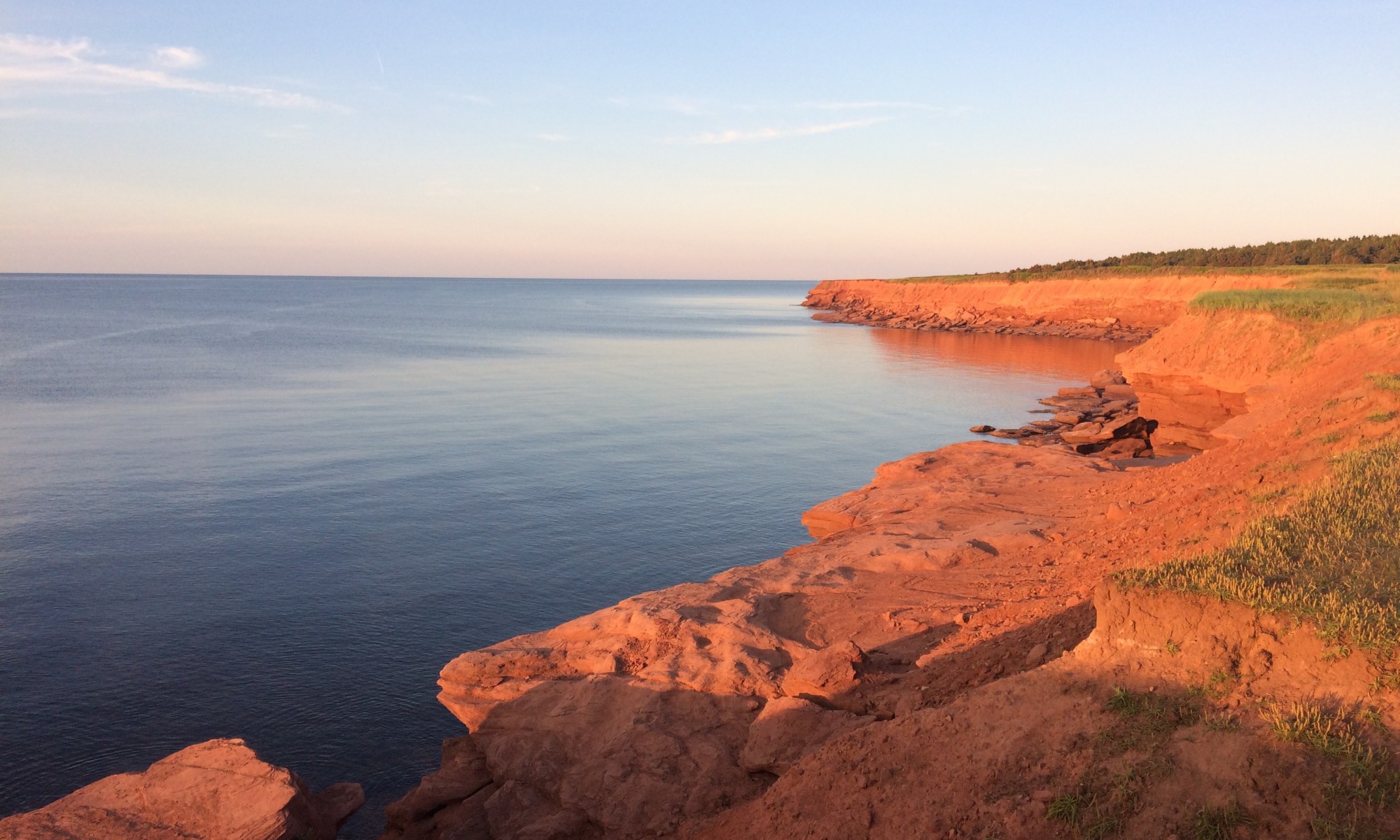
I didn’t actually set out to travel the Acadian Triangle at all, much less in the same year. When my travel plans sort of haphazardly came together for that year, I didn’t even know what the Acadian Triangle was.
The Acadians were initially French colonial settlers (c. 1604) in what is now eastern Canada, in the provinces of Nova Scotia, New Brunswick, and Prince Edward Island. Over the next hundred fifty years of frontier living, they developed their own unique culture and identity, much like I imagine my own colonial ancestors did prior to throwing off British rule during the American Revolution, or my pioneer ancestors did as they settled in the untamed west of what became the United States of America. The Acadians learned to make do without the conveniences and commerce of the civilization they left behind, and adapted to a new landscape, a new climate, and found ways to tame the land into meeting their basic needs of food, water, and shelter… and wringing precious drops of time for gathering together to worship and celebrate and develop customs and culture unique to their time and place.
Their history is complex, involving many personalities and ideals and relationships with surrounding communities over time, but in simplistic terms the Acadian colonists found themselves caught in the crossfire of French and English battles that resulted in the territory changing hands a few times. In 1755 the English claimed the territory once again, and those in power questioned the loyalties of the Acadians (and perhaps also coveted the prime lands they had already tamed.) The numbers aren’t all precise, but out of about 15,000 Acadians, over 10,000 of them were removed from their homes and crammed into ships to be deported, in what is now called le grand dérangement, the great upheaval. It is estimated that at least half of them died, from disease, hunger, or being lost at sea.
Families were separated, and the Acadians were scattered everywhere, becoming refugees along the east coast of the British-American colonies (where the colonies would even allow their ships to land, since many refused to be burdened with more mouths to feed through the winter), as well as England, France, and some Caribbean islands. Gradually word spread to the displaced Acadians over the next generation that their kinsmen were beginning to gather in what is now Louisiana. Some of the Acadian culture and sense of community identity has survived into the modern era in spite of (or, perhaps also because of) the incredible opposition that attempted to wipe them out in many different ways over three centuries. Today we tend to think of ‘Cadians in Louisiana as Cajuns (although I’ve found unsurprising controversy as to what aspects of modern culture are included as authentically Cajun.) The “three points” of the Acadian Triangle are considered to be eastern Canada, western France (particularly Nantes and the Loire River Valley area), and Louisiana.
At the midpoint of the [2004 World Acadian Congress], Grand-Pré [Nova Scotia] hosted a Louisiana Day, in honor of the thousands of Cajuns who headed north to attend congrès events and family reunions. The rollicking sound of fiddles and accordions straight from the bayous spilled from a circus-sized tent as chefs served up gumbo and spicy jambalaya. Louisiana T-shirts outnumbered Acadian tricolor flags and pins as visitors toured the grounds or paused to compare family trees with strangers who turned out to be distant cousins. Loubert Trapan was struck, as he always is, by how much the Acadians he meets in Nova Scotia resemble the Cajuns he knows back home. “It’s like we have a bond,” he said, switching from English to French with ease, “the facial features, the walk, the talk, are so close.” Before the official welcomes and speeches, a sixty-four-year-old U.S. Department of Agriculture manager from Abbeville named Dale Broussard was coaxed on stage to show these long-lost northern cousins how to do a proper Cajun yell. “You can’t become an honorary Cajun until you do it well,” he shouted, his eyes twinkling with mischief under the brim of a black cowboy hat. “Eye-YEEEEE!” he bellowed into a microphone as the Louisiana contingent chimed in and the rest of the crowd did its best. Later in the day a Louisiana visitor paused in front of an oversized photograph of northern New Brunswick’s frozen landscape in the dead of winter, part of an outdoor display of images capturing the spirit of Acadie and its people. “You know, y’all,” he drawled, “Im kinda glad they deported us. I couldn’t take that kinda cold.”
~Dean Jobb, The Acadians: A People’s Story of Exile and Triumph
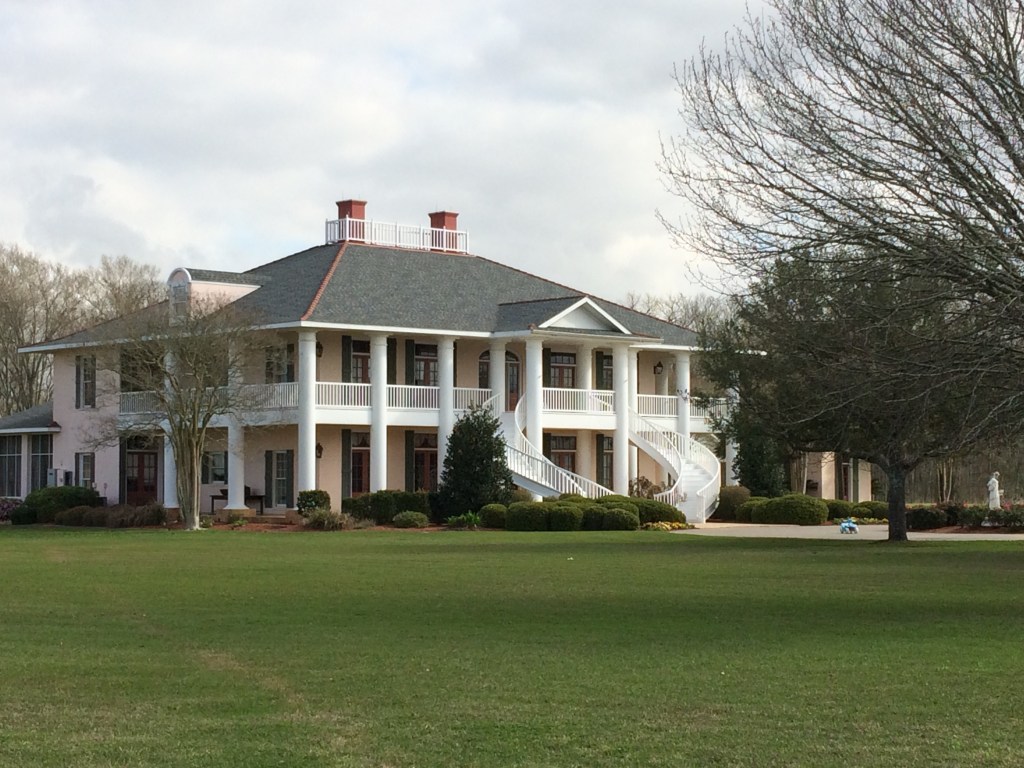
My travel ambitions multiplied that particular year, since (other than work travel) I tend to keep my big trips to about one a year—both because of the expenses and because it turns out I have a finite amount of energy to expend on adventures to new places. I simply need down time to recuperate and process experiences and restock my energy levels. Louisiana was deliberately planned as a backstory detour, to explore the childhood setting of one of my story characters, using some of my vacation time in the middle of the winter. My best friend and I had been planning to visit Prince Edward Island for a couple of decades, and our plans were finally coming together for the summer. My niece needed another adult chaperone for her dance troupe traveling to Paris in the fall, and my sister-in-law knew how much I’d always wanted to travel to France. None of my trips overtly had anything to do with Acadians—and the following tales aren’t really about them much at all—but over the course of the year those Acadians and Cajuns subtly influenced some of the choices I made while traveling.
As I read about their experiences in Dean Jobb’s book, The Acadians, they had a profound impact on my soul, and they kind of stayed with me. Perhaps because I’ve always been enchanted by the stories of my own ancestors, I recognized kindred spirits in the Acadians with their overarching resilience, persistence, and indomitable character. Haha, or as Jobb puts it, their ingrained stubbornness, resistance to authority, and pragmatism, which can be a double-edge sword: it’s great for survival while taming the wilderness, but tough when civilization creeps back in and demands oaths of loyalty and conformity.
You can tell a Cajun a mile off, but you can’t tell him a damn thing up close.
~Dean Jobb, The Acadians
Around the same time as travel plans were coalescing, a new and unexpected friend, George, was allowing me to practice my limited French skills. I’d taken several French classes in high school and college, but my vocabulary was still frustratingly limited and my sentence structure was cringeworthy. (For me, I mean, not the stuffy French… they seemed to find everything about me cringeworthy, haha, a fact I started to relish with mischievous glee.) His French was different from what I had learned in school, and he really opened up the world of Cajun French for me. George gave me room to hone my grammar skills and expand my vocabulary, correcting my mistakes along the way so I could learn. He encouraged my efforts so that I enjoyed the thrill of reaching ever higher to acquire this new language (both Cajun and Standard French, really) and incorporate it into the fabric of my life. He was the one who initially pointed me in the direction of discovery about the Acadians and their history, after my travel plans had already been made, and because of that I started to think of it as my Year of the Acadian Triangle.
There’s a saying about the stubborn and resilient nature of the Acadians: On est beaucoup tête dur; fait du nerf et de la babiche: We’re hard-headed; wrought of nerve and sinew.
~George E. Hand IV
I actually wrote up several of the following experiences in Cajun French to send to him, just to practice my writing skills—because let’s face it, the practice sentences and writing prompts in American French-language text books are dull and soul-sucking, with zero scope for the imagination. The need to express the joy of going to new places and exploring curious new things was sufficient motivation to wrestle with complex conjugations and language nuances to get those thoughts and emotions onto the page. George was a suitably appreciative audience who delighted in descriptive words that were sometimes new even to him, and (as a writer himself) occasionally pushed me to publish the things I wrote so that others could benefit and enjoy them. While I told him I would probably never share those tales with anyone else (and in Cajun French I probably won’t…I’m not sure my foreign language confidence extends quite that far, haha) I decided they are exactly the sort of tales I envisioned writing when we started the StoryCapades site.
Up next: Miche’s travel adventures in Louisiana, Canada, and France.
 storycapades.com
Lovely reading this, and look like all beautiful places. It is incredible how much history is lying underneath everything that you see.
LikeLiked by 1 person