

When I was young, I fell in love with story
With the eleventh hour, with the blaze of glory
The theater lights dim and all goes quiet
In the darkest of rooms, light shines the brightest
When hands are tied and clocks are ticking
An audience convinced, we’re leaning in
Holding our breath again
Just when we thought the game was over
The music lifts and our dying soldier lives
And we breathe a sigh of relief
~The Projectionist, by Ryan O’Neal, Sleeping at Last
I love stories. I love reading them. I love writing them. And when I meet (or hear about) new people, they get categorized inside my head by their story instead of their name or face (which can be awkward later…) Even when I was little, I was forever scribbling down story ideas and imagining whole scenes for characters I created.
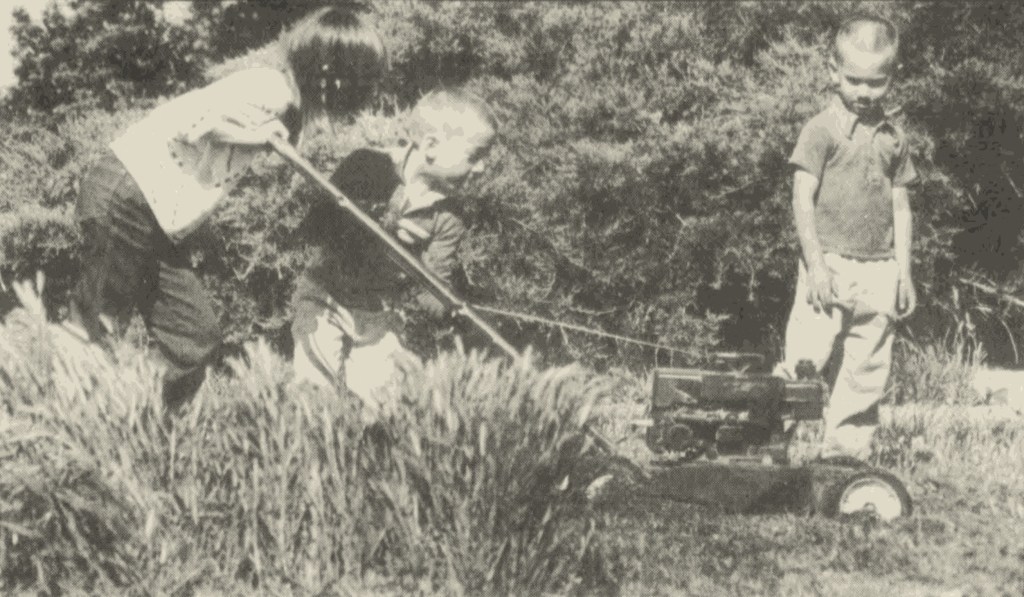
I typed my first “official” story when I was nine or ten years old. My younger siblings and I went to my dad’s office with him on a Saturday—probably to help him with the yard work or just to get us out of our mom’s hair for a day—and I knew I would have access to the typewriter and crisp, clean white paper. I took my folded up notebook paper with me, covered with pencil and eraser markings, and when the time was just right and my dad was busy with other things, I sat down and pulled out of my pocket the story I had worked on for weeks. Surrounded by my younger siblings who hovered to watch me type, I inserted the new paper into place, and carefully began to press the typewriter keys one by one. It was pure magic as my story flowed from barely legible pencil to beautiful black letters against a white background. I was hooked.
It wasn’t a particularly good story (about a girl who lived at a lighthouse and had lots and lots of chores and met a mermaid one day while playing by the rocky shore). And at only four chapters spanning two pages, it wasn’t very long. But at that age, I was cheerfully oblivious to standards and soared on the euphoric high of writing that first story for a good long time. It didn’t occur to me to show it off to anyone or to try to get it published, because those things didn’t motivate me. It was transferring the story from inside my head to paper—so I could read it anytime I wanted—that created a sense of triumph and satisfaction.
There were always opportunities for creative writing at school, and my mom kept some of those examples among my keepsakes. As I got older, I started adding to that collection myself, and it’s still fun to go back and read through my many homework assignments. I tend to smile and laugh and cry when I read my own stuff; it’s fun to discover (…every time…) that I think I’m soooo funny and clever. That’s not ordinarily how I view myself, so it’s ridiculously fun to go back later and read from a more “objective” point of view and realize that I totally get my own sense of humor. (Which is nice, because not everyone does.)
The next time I actually sat down to write a “full length story” was the summer before my senior year of high school. This time we had a computer at home with a word processor and a dot matrix printer. There was no internet—although the nascent public version was just emerging, we didn’t have access to it yet, and there wouldn’t have been anything interesting to explore yet from my writer’s perspective anyway—and so I relied on our decades-old encyclopedia set to research any information I didn’t know. It took weeks, saving everything on a floppy disk, making edits, consulting notes, doing more research, rearranging some things, and I was incredibly content and energized. The final result was more than 100 pages long and over ten chapters. This time I did share it, with my brother Paul and my best friend Kasey. And bless them, they read it (…or, at least they said they did, and I wholeheartedly believed them), and they praised my work, and I basked in the moment of glory, seeing another story (a much more complex one this time) transferred from inside my head to the printed page.
A couple of years later, with a little (…very little…) more life experience, that second story made me cringe—not yet from an experienced writer’s standpoint, just from the realization that I had glossed over waaaaaay too many details that made it inaccurate and implausible. I didn’t know what I didn’t know; I hadn’t understood the vast scope of things I needed to learn to write that story. I don’t mean the story mechanics (although I needed to learn that, too). I mean I had exploding cars without understanding what makes cars explode. (Hollywood. Hollywood is what makes cars explode. In real life they just burn with a sort of desultory “pop” when the gas tank goes; I had the opportunity to watch one late at night across the desert wash behind my house. Incidentally, I’ve always been curious about the story behind the intentional destruction of that car…) I had an Afghan princess—because I wanted a not-European princess and went searching for other countries with royalty and picked Afghanistan at random, never mind that their royalty ceased ruling long before I was born—and I knew nothing of Afghanistan other than a brief description of deserts and mountains, and since I lived among deserts and mountains, I figured I knew enough. (Little did I know Afghanistan was about to feature prominently on the world stage and I would have a plethora of details to comb through. Including, sadly, many vehicles caught in external explosions from roadside bombs.) I had CIA agents propelling that story forward from Las Vegas to Afghanistan, and I was completely clueless about what the CIA even does, or why.
I started a handful of other stories in my late teens and early twenties, and got several scenes or chapters into each one, then halted, realizing I needed more information before I could write the story (whichever story I was working on in the moment) as effectively as I wanted to. I didn’t expect perfection; I just wanted to be able to not roll my eyes when I went back to read it again later.
The Devilish Fun in the Details
I found that details mattered to me. A lot. My story-writing pattern started to look like this: Whoa, that’s an awesome story idea, I should totally write that down! Huh, I don’t really know anything about x, y, or z. I should go look that up. Then I would spend days, weeks, months in the library, flipping through the card catalog and hunting down books on topics I knew nothing about.
One of the greatest joys of non-fiction organization in a library is that once you know the call number of one promising book, that book has neighbors, sometimes surrounded by a whole neighborhood of books on the same topic. And I absolutely judge books by their covers…although perhaps in an atypical way. If I’m looking for old, historical information, I’m going to be much more drawn to old books with plain or faded covers rather than some new and fancy perspective of old things. If I’m hunting down books that share realistic first-hand experiences, I’m going to be much more drawn to low-budget books that aren’t polished by a big-name publisher. If I’m trying to figure out how to describe something I’ve never seen in person, I’m going to be drawn toward high quality photos or detailed schematics.
I had notebooks and scraps of paper and computer files full of one-shot documents on whatever random topic I decided I needed to understand better before writing a particular story.
And somewhere along the way I started to feel less like a story writer and more like a story researcher. Since I considered story writing such a key part of my identity, I was a little disgruntled to realize I was spending all my time exploring one rabbit hole after another, and having such a marvelous time that I wasn’t returning to the hard work of actually getting stories written. I wrestled with that “mid-life crisis” of identity and goals for a good decade or more (long before I hit the era of mid-life) before finally embracing my love of learning and exploring as an integral facet of my being, not merely an insignificant stepping stone to more important things.
Once I gave myself permission to enjoy learning to the fullest, “writing stories” became the stepping stone to greater things, like going to college for a couple of geology degrees, taking sign language courses, buying a motorcycle, working toward a couple of blackbelts in martial arts, learning to paint and draw, deciding to include a sword-smithing forge when I remodel my house (that one hasn’t happened yet, but I’m pretty sure it will), and traveling to explore the world and many of the settings for my stories. Because it’s one thing to read details in a book or watch them on a screen, but it’s amazing how very different all those things are once you experience them in real life. And how could I possibly write about things I don’t know? I couldn’t, at least not very well. And that became the only excuse I needed to give myself permission to be brave and try all the things I secretly hungered to do… things I had read about inside books but wanted to see and do for myself.
I lead a small life – well, valuable, but small – and sometimes I wonder, do I do it because I like it, or because I haven’t been brave? So much of what I see reminds me of something I read in a book, when shouldn’t it be the other way around?
~Kathleen Kelly, You’ve Got Mail (Nora Ephron)
Becoming a Writer
I’m probably not the only person who has ever wrestled with whether I get to call myself a Writer with a capital w. On the technical side of the equation, I absolutely fit the definition of “one who writes” because I do it every day of my life. I have over a hundred personal journals full of daily writing. My job consists of very technical and dense daily writing, and I love it. I write letters to family members, some of whom tease me about writing novels—and they mean the letter they just finished, not the actual novels that aren’t written yet. I write long posts on Facebook when I feel a burst of thoughts that just have to be shared on something new I learned. Long-suffering friends and family patiently read through long text messages or Messenger notes when I have to work something out in writing, because it’s way too complex inside my head to try to organize as I’m speaking.
Writing is like breathing. I could probably live without it for a short time, but it would get uncomfortable and I would wilt.
But being a Writer is somehow a sacrosanct label reserved only for those who are living the dream of being a recognizably published author. It seems like a special and exclusive club on another plane of existence, out of reach for the ordinary person. In that sense, I’m most definitely just a writer, and I might not ever graduate to that other plane of existence. I find that being a recognizably published author doesn’t particularly motivate me. Not that there’s anything wrong with being a published author, it just seems to come with a lot of, well, sticky social obligations and expectations that don’t appeal to me at all: marketing, book signing events, working with nitpicky publishers and editors, always rushing toward the next book for fickle readers who wait impatiently with bated breath and then tell the whole world how much they hated the new creation. It all sounds rather exhausting, and a steep price to pay just for a capital w. (I may eventually talk myself into that realm for reasons other than recognition, but for now the whole process seems calculated to induce a terminal case of ‘writer’s block,’ and who needs that squishing the creative spark out of the soul?)
Even so, I think being a writer is still an integral part of my sense of self.
I was in college for a really long time (I got three degrees out of it, so it wasn’t wasted time, but still, it was a loooong time), and I felt a sort of moral-financial obligation to stay focused on my studies and not take time away to play, a.k.a., research all my story ideas. Sometimes I would get the itch to read something just for fun, to just take a break from all the hard science and legal cases and technical details and enjoy an escape into a world of fiction where things had a beginning and an end, and hard things were overcome in something less than a decade. Since I categorize things by stories instead of names inside my head, dredging up the title to an old book I once read and liked (if it’s not already on my shelf) can be a painstaking effort. Yay for the advent of the internet, where I can type plot basics into the search engine and (sometimes) the very book I’m thinking of magically appears. (Yay also for all the people who have to share their love of stories we share in common on the internet so I can find them again!) The best—or most frustrating—moments, though, were trying to place a story with a title and eventually realizing I couldn’t read it because it was mine, and I hadn’t written it yet. It felt very validating to my latent Writer, but very frustrating to my voracious Reader.
As soon as I finished college and got settled into my career (and had disposable free time I could use however I wanted), I pulled out the many scraps of paper full of story tidbits, and printed all the scattered computer files full of research, and rolled up my sleeves and got to work. It was overwhelming. Not only did I have the unfinished stories from before college waiting for my return, but in the meantime dozens of other story ideas had emerged thanks to a plethora of life experiences that snagged my creative interest. I had no idea how to begin the monumental task of turning all of this stuff into stories I could curl up with on the couch and enjoy reading any time I wanted.
It took a while to find what worked for me, and I discovered some very interesting things about me along the way. I don’t deal well with unstructured creativity, haha. That probably sounds incredibly boring, but I love having a solid framework I can trust and a limited space where my creativity can do whatever it wants without taking over the rest of my life. I have a delightfully whimsical side that surprises me, but I only give it room to play when I know the silliness isn’t going to topple over all the rules and details and structure that sincerely matters to me. And weirdly, it works, this precarious balance of highly technical structure and airy creativity that likes to have a meaningful place to land.
One thing that helped early in the process was deciding to make my stories interrelated. The thought of coming up with meaningful secondary characters and settings and backstories for 60+ unwritten stories was daunting… until the day my brain said, hey, what if that role was filled by this person from this other story over here? What if they were cousins or brothers or friends or something? And from there it snowballed until ALL of the stories were interrelated in one way or other. The plan came together and brought the most amazing contentment and sense of purpose and direction. It also, however, meant that for consistency’s sake, I had to plan the stories all together as a group. I couldn’t have the timeline or details of one story completely derailing another story. The Reader in me would never be able to “suspend disbelief” and enjoy the story if those kinds of errors crept in.
Another method that helped was realizing that I need both the convenience of technology and the tactile feel of tangible documents to flip through when I need quick access to detailed information. It was complicated to juggle everything at first, to find what worked and what didn’t, but eventually I started collecting loose papers into highly organized story binders held together with loose rings. I bought and assembled tall wooden filing cabinets (stained a rich dark color that makes me sigh with contentment every time I open a drawer) to organize all the story binders and other files that hold loose papers until I decide where they belong. I found worksheets online and created some of my own, and filled in all kinds of details about characters and settings and plots. It was crazy how much information was already at my fingertips when I started to write details down—it was like I had lived with these characters inside my head for years, and now they were all crowding around my laptop waiting impatiently for their turn to share everything there was to know about them. And I discovered wonderful story-writing apps like Scrivener and Aeon timelines to keep things even more organized and readily accessible.
Once I realized that getting all the details already stored inside my head out onto paper was going to take a while, I started taking turns between organizing stories, doing research, and learning about the mechanical details of writing.
Initially the research was simply the old method of reading books from the library and the new method of searching for specific details online. After a couple of years, it expanded to other rabbit holes like travel and classes and riding my motorcycle, which I finally had the financial ability to enjoy. All of it added to what I could include in the existing stories, and I fought pretty hard to find places for new sparks of creativity to land without having to start new stories. The good news is, with over 60 stories, there’s usually a good home already prepared to welcome in the new ideas, and that’s a satisfying relief.
Since I write all the time and I tend to like what I write, I flatter myself that I’m a good writer. (This illusion is only reinforced by the most lovely compliments from family and friends who tell me what a great writer I am. It’s by far my favorite compliment, and I’m pretty heavy-duty stapled to that view of who I am.) But the truth is, I’m also a lazy writer. Not when I have to do the technical writing for work, of course, but when I do creative writing… I relax and slip into stream-of-consciousness style writing. I write like I think, without really stepping back to consider the mechanics of good writing. I know them in a general sense, partly from reading so many well-written books, partly from absorbing information in school about writing well like a sponge.
But when it comes to doing my stories justice, I know I need to put in the effort to learn the rules and how to break them with impunity. So I’ve also taken time to read books on writing and to learn from others who write. Some of what I read or hear is “intuitively obvious” (even if I don’t put it into practice and definitely need the reminders), but there have also been many aha! moments of fun discovery, like realizing that I can do things on purpose instead of waiting to see how my stories turn out. (I kind of got used to my stories telling me how they wanted to be written, with ideas stumbling and hurling themselves forward faster than I could write or type. But I have since realized that I can also tell them what to do, and my imagination will pause to consider and take up the gauntlet I toss down, reconfiguring the stories to accomplish many layers of meaning and purpose. So fun.)
Moment(s) of Truth: Actually Writing Stories
I’ve been very methodical the past several years about the steps I needed to take before I could sit down and write my stories the way I wanted. After pouring out the things I already knew, I had to take time to develop all the details I didn’t know or hadn’t considered. Sometimes that has felt like an endless task list, working my way through each iteration of all the story elements that will eventually be pieced together, and to do so for over 60 stories. (I read a book once about how to write a story in 30 days, and it became my fanciful mantra to prepare 60 stories in 60 months. Ha! It hasn’t quite worked out that way, and I haven’t counted the number of stories I’m currently juggling—but that was a good book, and it inspired some meaningful effort that I adapted to my own needs.) Endless task lists are sort of my thing, so it never bothered me to keep working on the “trees” without worrying overmuch about the “forest.” Except when it came to two things: one, feeling like I had permission to tell my friends and family how much I love this ridiculous hobby that fills every corner of my life in one way or another; and two, wondering uncertainly if I really have what it takes to sit down and write the stories, or if I will only ever be a researcher and preparer of unfinished stories.
My goals (all of them, not just story writing) tend to be long-term and large-scale and don’t often fit comfortably in a modern push-button, instant gratification society. I’ve heard people talk about the importance of setting SMART goals—Specific, Measurable, Achievable, Realistic, and Timely (or other subtle variations)—but I find that doesn’t really work for me. Maybe it’s just a matter of semantics, but when I have a destination in mind, it takes however long it takes, and it might not be measurable or realistic or achievable. But I’m still getting there, by sheer stubborn willpower if nothing else. I can set SMART tasks in the interim that I think will help me help me more quickly and efficiently reach that destination. Some of those tasks work out better than others… but the destination doesn’t change. If getting there one way doesn’t work, I might backtrack and find another way. And while I might experience frustration or discouragement at times because my efforts didn’t work out the way I thought they would, that frustration and discouragement tend to be short-lived, just until I sort out the next plan of attack.
As I write this article it is New Year’s Day, by far my favorite holiday of the year. A whole day I get to dedicate to stepping back and reassessing whether my destinations are still important to me (they almost always are), and whether what I’m doing is working or needs some adjustment (usually a little of both). I know not everyone loves New Year’s Resolutions. People feel like they do well for a few weeks or months and then everything falls by the wayside when real life imposes a time crunch and a reality check. I think one of the reasons I don’t care about how often I get derailed by the vicissitudes of life is that it doesn’t matter to me how long it takes to get there, as long as I’m progressing and can see that I will get there, eventually. Another reason is that my goals all tend to be about who I want to become, and don’t include an element of impressing others, in the meantime or at the end.
Even so… it can be tough to live in this modern world and want to share my excitement about my progress and to try to explain that—by the time I finally finish all of this—no one but me will even remember that I set out for this destination, much less why it mattered so much to me. When it comes to writing stories, I’ve learned to admit that they may never get written or published, and to focus instead on the fun I’m having along the way. That seems more digestible to others (and lowers their expectations so they don’t ask me if I’ve published my stories every time they see me, sigh). And taking that approach has helped me, too. I’ve asked myself a few times if I would regret not writing these stories if I died with them still unfinished, and the honest and somewhat painful answer is yes. (Funny how spending an inordinate amount of time psychoanalyzing characters and their motives opens the way to dig deeper into one’s own life…) But what I wouldn’t regret at all is the time I’ve taken to do it “right,” to do it in the way that will be most pleasing and satisfying and authentic to me. I wouldn’t regret taking the time away from writing to learn how to do a butterfly kick, or how to ride a Harley, or figuring out how to be brave in a foreign country, or how to knit. I get to keep all of those experiences, whether they ever make it into stories other people can read or not.
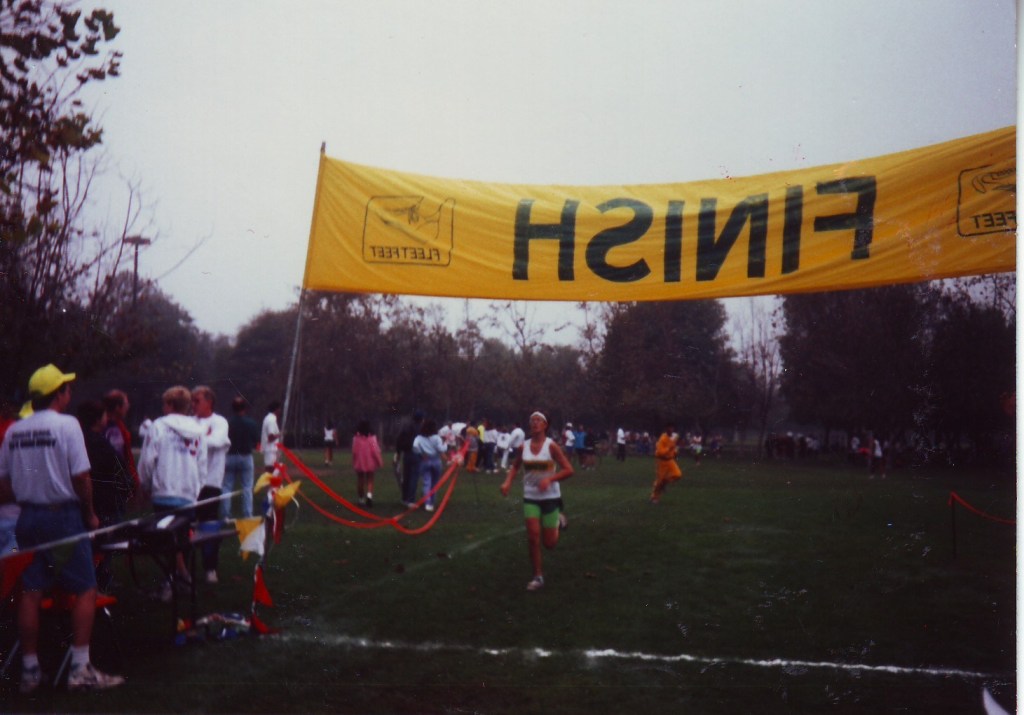
As this past year was winding down, the particular story layer-task I was completing was also winding down. I could see the light at the end of the long tunnel, and—just like when I could see the finish line in the distance when I ran cross country—I suddenly caught my second wind and picked up speed and lengthened my stride. Instead of being stuck in an endless layer that might never get finished in the foreseeable future, I found myself buckling down, setting aside other things to focus more fully on finishing this task before the end of the year. I wasn’t actually sure I could do it, because I was compressing the time frame by a lot and setting high expectations and not making much room for the usual derailments of life. But I did it, and the experience was exhilarating. I was reminded why I loved each of these stories, one after another, and I found myself excited for the next phase.
And I discovered this year that my methodical approach had a pretty amazing benefit, aside from the obvious one of breaking down the impossible into bite sized tasks: my accumulated layers finally reached a critical mass. I realized I wasn’t starting from scratch with each story, I was just building on something that is already remarkably well-developed. I mean…. that was the PLAN. But it worked! And for the first time I could see it. And it made me feel like a Writer (even if I do say so myself). Not because I have anything I can publicly show for it, but because that destination is closer than it’s ever been, and I haven’t given up, and all the incremental progress actually does add up to something meaningful.
It might be another year or so before I’m ready to sit down and face the music, to determine whether all this work was worth the stories that will come out the other side. But for this moment, I don’t feel like I’m avoiding the hard work of writing. I feel like all of this IS the hard work, so that the writing part will be fun and easy. I suppose I’ll cross that bridge when I come to it, and then I’ll see what’s next… The destination won’t change, so if it turns out I still suck at writing according to my own standards and expectations, I’ll just figure out why and develop a new plan of attack. But I’m pretty sure at a minimum it will involve writing the crappy first draft of every single story, from start to finish, because then I can graduate and it becomes an editing problem. And that will be fun, too. “Closet editor” has a nice ring to it.
 storycapades.com